  Russet Potatoes These versatile white fleshed potatoes store better than the fancier ones you got at the beginning of the fall.
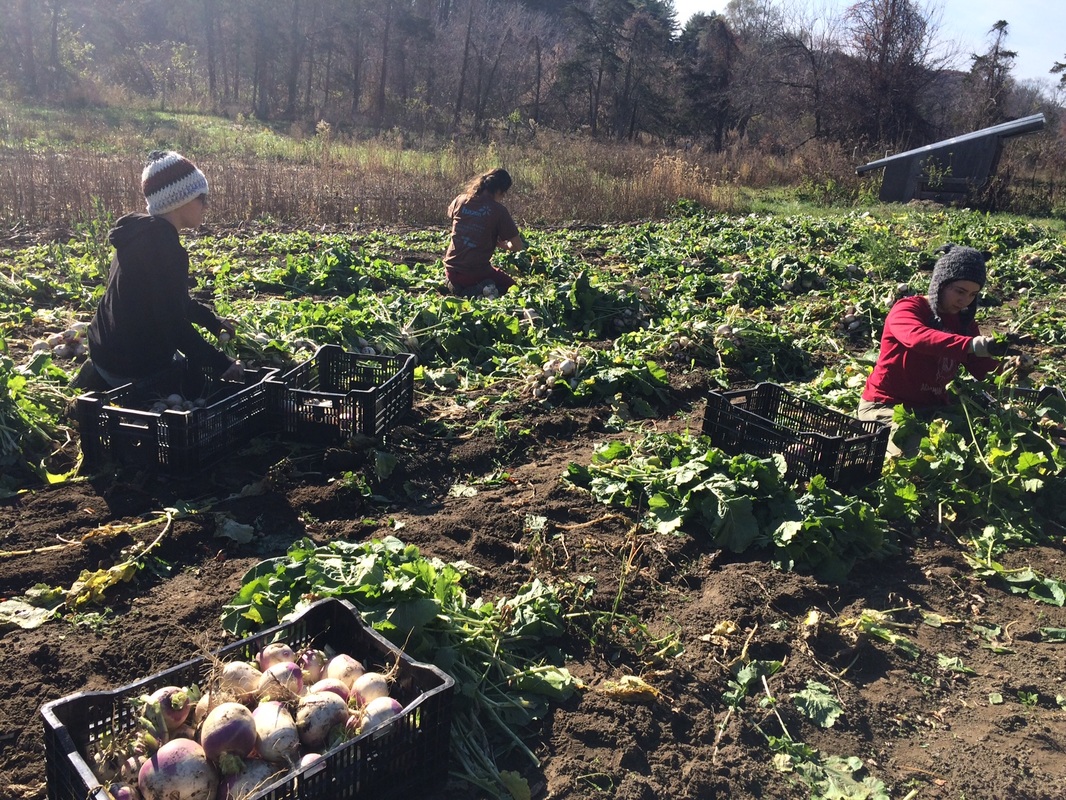
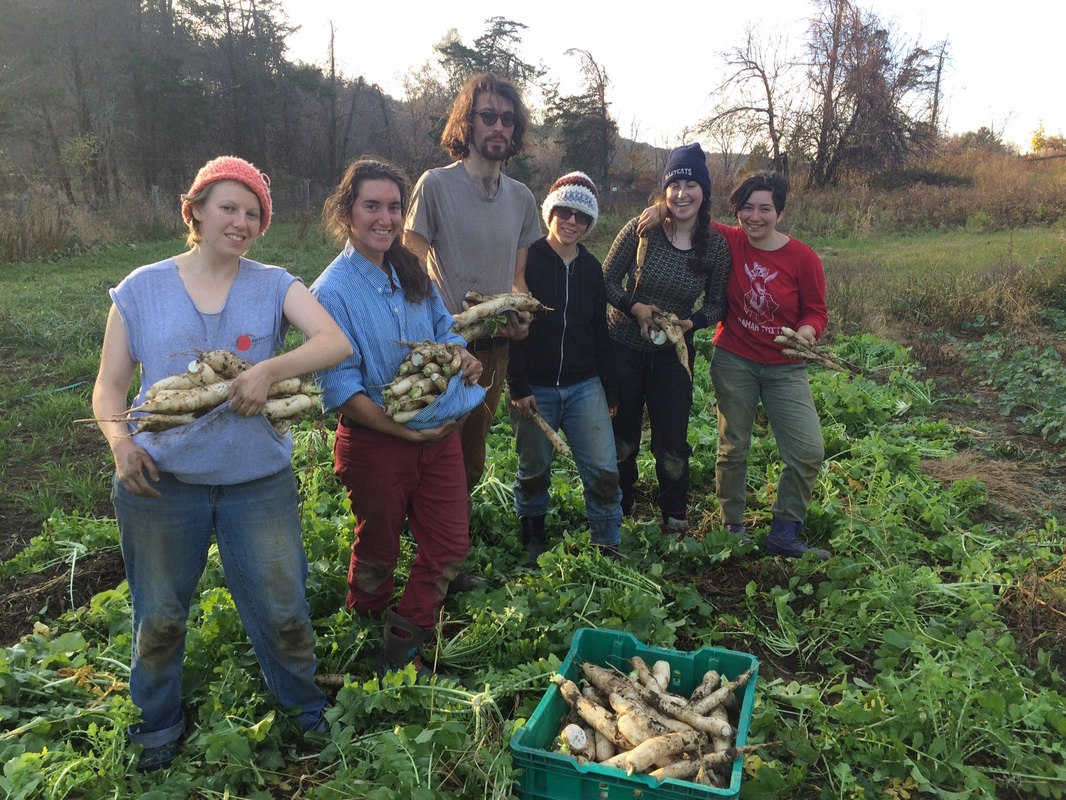
Dill Try this beautiful dill in potato salad or borscht from last week’s beets. Watermelon Radishes You could try a fancy Thanksgiving appetizer by slicing these and using them as crackers topped with any kind of spread. You can also simply shred them up for raw salad or roast them in the oven in thick discs the same way as I do with daikon radishes and storage turnips. Daikon Radishes These Asian storage radishes are perfect in sushi or stir-fries. You can also eat them raw if you like a sharp bite in salads or you can roast them in the oven if you want to bring out the sweeter side. Purple Top Storage Turnips The turnips you received earlier in the season wouldn’t store for more than a week and they were easy to eat raw. In contrast, these are best cooked, either as thick roasted slices, blended into soups, or boiled in stews like cholent. They will store all winter so there is no Black Beans Beans are easy to grow but take a lot of time to process by hand. Enjoy this very special item- local, heirloom plant based protein! Broccoli This is one to eat first since it doesn’t store. We are sad to say that most of the fall broccoli and all of the cauliflower were eaten by woodland critters who made their way onto the farm in search of water in this drought. Kohlrabi This variety is meant to be large and to store for months. We have been eating them raw, peeled, and cut into sticks on their own or dipped in hummus. It takes like a cross between an apple and a broccoli stem and is kind of addictive. You can also cook kohlrabi on the stove or in the oven. Cabbage Another storage crop that you have plenty of time to get to. I love making salads with cabbage, cooked french lentils, walnuts, and mixed well chopped miscellaneous produce like kohlrabi, radishes, raisins, and apples. I use a creamy dressing and have a dish full of protein, vitamins, and flavor. Long Pie Pumpkin This heirloom makes the best pie with incredibly smooth texture and rich flavor. It isn’t very sweet, so take that into account when measuring sugar. It also makes great soups, muffins, and roasts. Kabocha Squash These gorgeous bright orange squash are an award winning favorite. They are good for pies, baked goods and savory dishes. Spinach The leaves sweetened in the cold weather and are truly gourmet. Comments are closed.
|
Categories
All
Archives
February 2024
|
- THE CSA
- The Farm
- BLOG
-
Veggie Tips
- Basil
- Beets
- Bok Choi
- Broccoli
- Cabbage
- Carrots
- Cauliflower
- Celery
- Chard
- Cilantro
- Collards
- Cucamelons
- Cucumber
- Dill
- Eggplant
- Fennel
- Garlic Scapes
- Garlic
- Green Beans
- Green Onions
- Hot Peppers
- Kale
- Kohlrabi
- Leeks
- Lemon Balm
- Lettuce
- Melons
- Mint and Mountain Mint
- Onions
- Oregano
- Parsley
- Peas
- Peppers
- Potatoes
- Radish
- Sage
- Salad Mix
- Summer Squash
- Tomatoes
- Turnips
- Winter Squash
- Food Access Fund
- Contact
- ☮
 RSS Feed

- THE CSA
- The Farm
- BLOG
-
Veggie Tips
- Basil
- Beets
- Bok Choi
- Broccoli
- Cabbage
- Carrots
- Cauliflower
- Celery
- Chard
- Cilantro
- Collards
- Cucamelons
- Cucumber
- Dill
- Eggplant
- Fennel
- Garlic Scapes
- Garlic
- Green Beans
- Green Onions
- Hot Peppers
- Kale
- Kohlrabi
- Leeks
- Lemon Balm
- Lettuce
- Melons
- Mint and Mountain Mint
- Onions
- Oregano
- Parsley
- Peas
- Peppers
- Potatoes
- Radish
- Sage
- Salad Mix
- Summer Squash
- Tomatoes
- Turnips
- Winter Squash
- Food Access Fund
- Contact
- ☮